Industrial vs. Retail Strip Centers: Which Is Better For Your Atlanta Portfolio?

The Atlanta commercial real estate (CRE) market in 2026 presents a complex landscape for local investors. Following the volatility of the mid-2020s, the choice between industrial assets and retail strip centers requires a detailed analysis of market saturation, tenant demand, and lease structures. As of early 2026, the Metropolitan Atlanta Area remains a primary logistics hub, but shifting consumer habits and supply-side pressures have altered the risk-reward profile of traditional asset classes.
Investors must evaluate these opportunities based on current data, focusing on the distinct performance metrics of industrial warehouses versus unanchored retail strip centers.
The Atlanta Industrial Market: Logistics and Limitations
Industrial real estate has long been the favored asset class in Atlanta due to the city’s role as a major distribution node for the Southeastern United States. However, the market entered a phase of recalibration in late 2025.
Current Supply and Demand Dynamics
As of the start of 2026, the industrial sector is navigating a period of significant supply. Data from 2025 indicated approximately 17.2 million square feet of industrial space under construction. This massive pipeline followed a period of aggressive expansion by e-commerce giants and third-party logistics (3PL) providers.
The immediate result has been a cooling of the extreme rent growth seen in previous years. In Q1 2025, leasing activity saw a 47% quarter-over-quarter decline. While the market remains structurally sound, the days of double-digit rent appreciation have stabilized. Average industrial NNN (Triple Net) rates are currently hovering around $9.30 per square foot, with warehouse and distribution centers specifically averaging closer to $8.57 per square foot.
Advantages of Industrial Investment
Triple Net (NNN) Lease Structures: Industrial properties typically utilize NNN leases, where the tenant is responsible for property taxes, insurance, and maintenance. For the Atlanta investor, this provides a predictable, passive income stream with minimal management intervention.
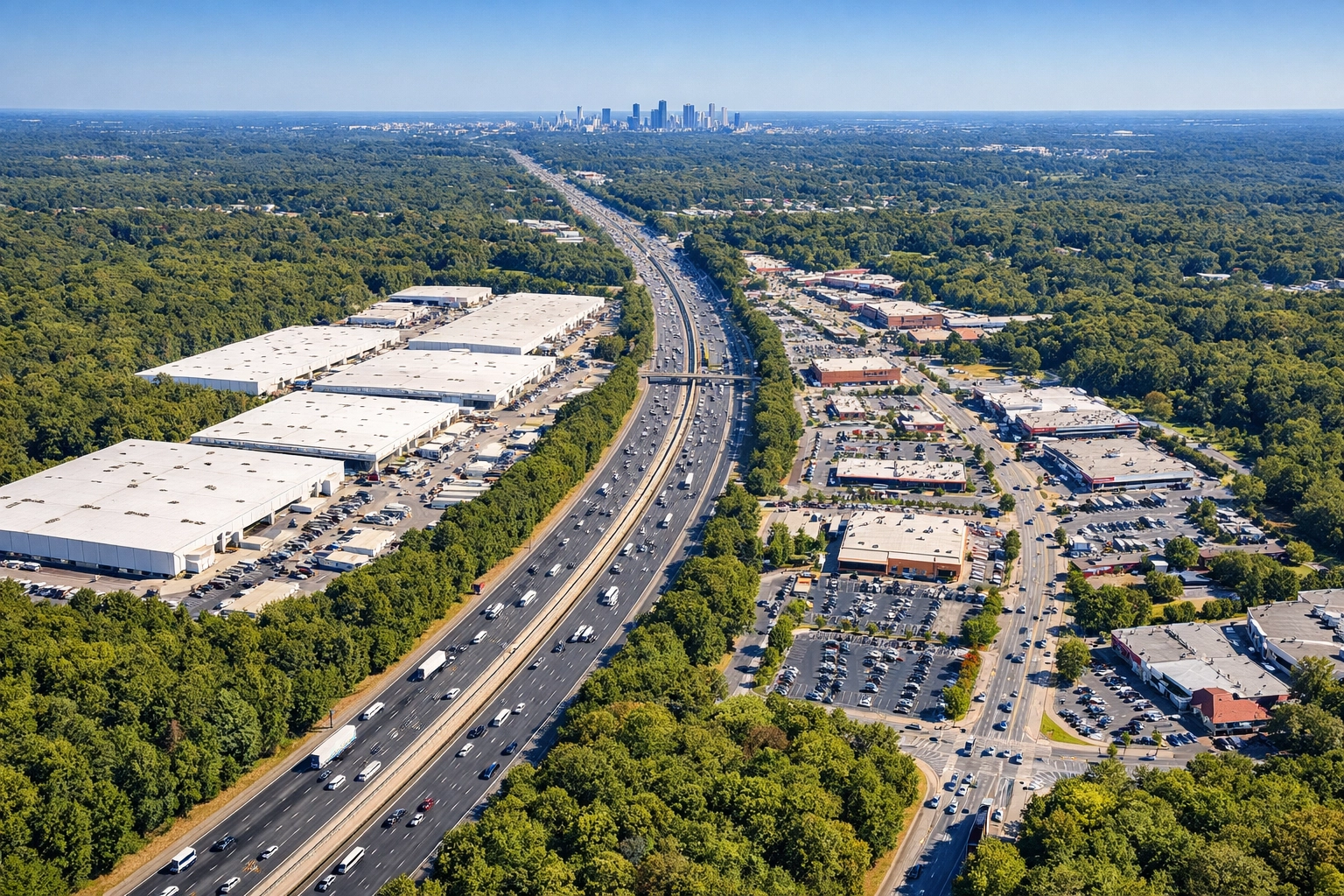
Strategic Infrastructure: Properties located near the Hartsfield-Jackson Atlanta International Airport or along the I-85 and I-75 corridors maintain high intrinsic value. The proximity to rail intermodals and major highways ensures long-term tenant retention for logistics companies.
Scalability: Institutional investors often prefer industrial assets because they allow for the deployment of large amounts of capital into single-tenant or master-leased buildings.

Sector Risks
The primary risk in the 2026 industrial market is saturation. The volume of new deliveries has led to a slight increase in vacancy rates and a marginal decline in rental rates (down 1.7% in early 2025). Investors entering the industrial space today must be more selective regarding location and ceiling heights, as older "Class B" or "Class C" warehouses with lower clear heights (under 24 feet) are struggling to compete with modern facilities.
Retail Strip Centers: The Resilience of Service-Based Real Estate
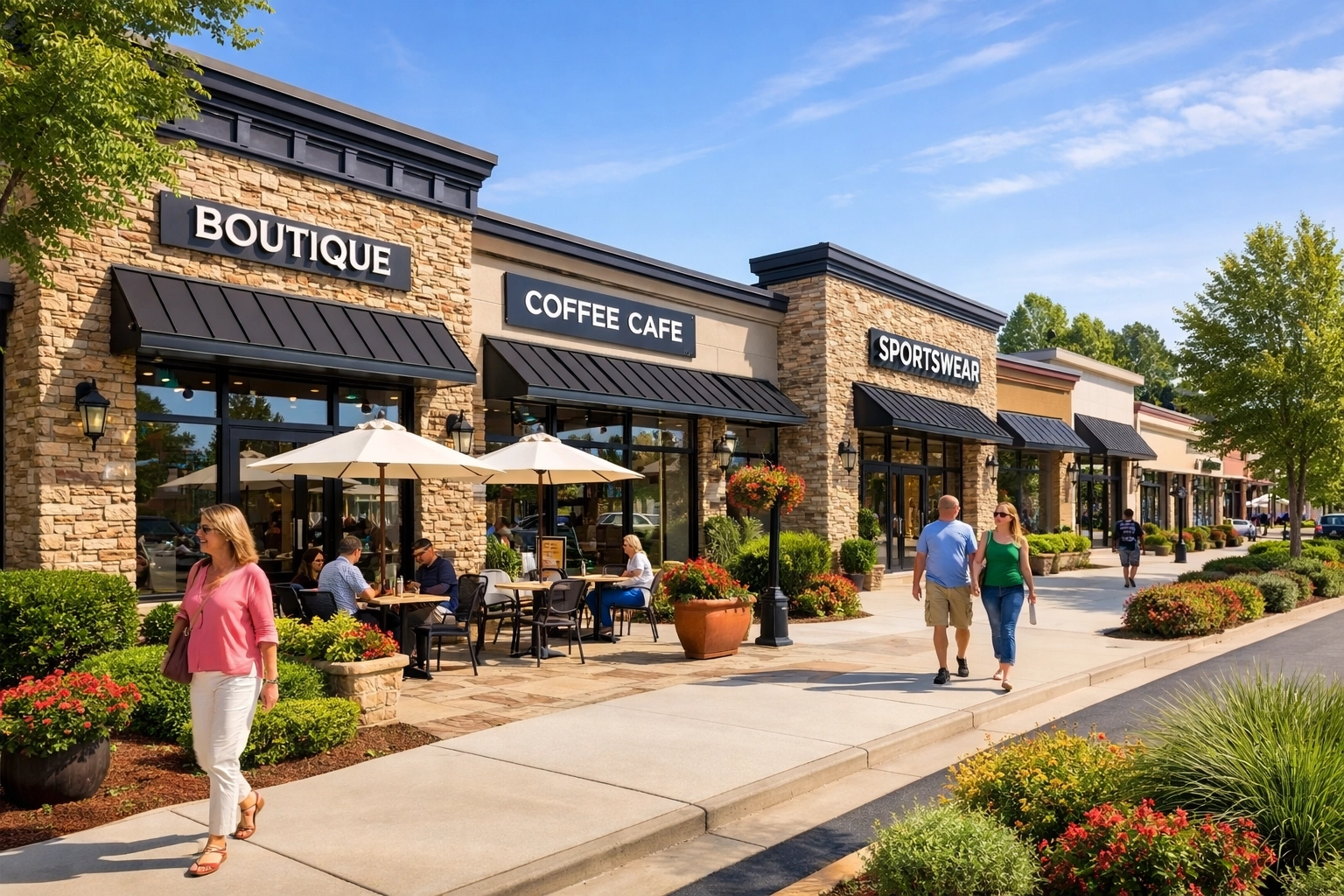
While industrial real estate deals with oversupply, unanchored retail strip centers have emerged as a surprisingly resilient asset class in the Atlanta metro area. These centers, typically ranging from 10,000 to 50,000 square feet, serve local neighborhoods and focus on necessity-based services.
The Rise of Unanchored Retail
Unlike large shopping malls or grocery-anchored centers, unanchored strip centers rely on a diverse mix of small-scale tenants. These include dental offices, hair salons, quick-service restaurants (QSRs), and boutique fitness studios. These businesses provide services that cannot be replicated by e-commerce, creating a "shield" against the online retail trends that have hurt larger "big box" retailers.
Performance Metrics in 2026
Occupancy rates for well-located strip centers in suburban Atlanta markets: such as Gwinnett, Cobb, and North Fulton: remained strong through 2025. While the broader retail market saw vacancy rates climb to approximately 4.4% in mid-2025, unanchored centers in high-growth residential corridors have maintained lower vacancy levels.
Advantages of Retail Strip Centers
Tenant Diversity: An unanchored center usually houses 5 to 10 different tenants. If one tenant vacates, the impact on the overall cash flow is limited. This is a significant advantage over single-tenant industrial buildings where a vacancy results in 100% loss of income.
Inflation Hedge: Retail leases often include annual rent escalations (typically 2-3%) and shorter lease terms (3-5 years) compared to industrial assets. This allows landlords to reset rents to market rates more frequently, providing a better hedge against inflation.
Service-Oriented Stability: The tenants in these centers are often "internet-resistant." Physical services like healthcare and dining require a brick-and-mortar presence, ensuring steady foot traffic regardless of e-commerce growth.
Management Intensity
Investors should note that retail strip centers require more active management than industrial properties. Managing multiple tenants involves more frequent lease renewals, common area maintenance (CAM) reconciliations, and tenant improvement (TI) negotiations. For an investor seeking a "hands-off" portfolio, this may be a drawback.
Comparative Analysis for the Atlanta Investor
To determine which asset class fits a specific portfolio, investors should compare the following key performance indicators based on current Atlanta market data.
Factor | Industrial Property | Retail Strip Center (Unanchored) |
Typical Yield (Cap Rate) | 5.5% - 6.5% | 6.5% - 8.0% |
Lease Term | 7 - 15 Years | 3 - 7 Years |
Management Requirement | Low (NNN) | Moderate to High |
Tenant Concentration Risk | High (Single Tenant focus) | Low (Diverse Tenant Mix) |
E-commerce Impact | Positive Driver | Neutral (Service-focused) |
Average Rent (Atlanta) | $8.50 - $10.00 PSF | $18.00 - $35.00 PSF |

Strategic Location Considerations in Metro Atlanta
The "where" is just as important as the "what" in the 2026 market. Atlanta's geography dictates the success of these investments.
Industrial Focus Areas
South Atlanta / Henry County: This remains the heart of the logistics corridor. However, it is also the area most susceptible to oversupply. Investors should look for specialized cold storage or smaller "last-mile" facilities closer to the I-285 perimeter.
I-985 Corridor (Gwinnett/Hall): This submarket has seen steady demand from manufacturing and light industrial tenants, offering a slightly more stable alternative to the massive distribution hubs in South Atlanta.
Retail Strip Center Focus Areas
Northern Arc (Alpharetta, Milton, Forsyth): High household incomes in these areas support premium rents for service-based retail.
The Eastside (Decatur, East Lake): As residential gentrification continues, there is a shortage of modern retail space for local services and dining, leading to high occupancy and strong rent growth in small-scale centers.
Portfolio Recommendations for 2026
For investors evaluating these two options, the decision should align with their specific financial objectives and risk tolerance.
The Case for Industrial
Investors should prioritize industrial assets if they are looking for long-term stability and have the capital to weather a potential short-term vacancy. Given the current construction pipeline, the best opportunities in 2026 are found in existing "Class A" buildings with credit-worthy tenants already in place. Buying at a slightly higher cap rate during this market cooling period may provide significant appreciation when the current supply is fully absorbed in 2027 or 2028.
The Case for Retail Strip Centers
For the local Atlanta investor looking for higher immediate cash flow (yield) and risk diversification, unanchored retail strip centers are currently the superior choice. The resilience of service-based tenants in the face of economic shifts makes these assets a core component of a defensive portfolio. While management is more intensive, the ability to adjust rents and the lack of speculative overbuilding in this sector provide a level of safety that industrial currently lacks.
Final Assessment
The Atlanta commercial landscape in 2026 requires a data-driven approach. Industrial real estate is no longer a guaranteed "buy and hold" for easy gains due to the recent 47% drop in leasing activity and supply concerns. Conversely, retail strip centers have shed their "risky" reputation by proving their necessity in local neighborhoods.
A balanced Atlanta portfolio should ideally contain a mix of both: industrial for long-term equity growth and retail strip centers for consistent, diversified monthly income. Understanding the nuances of NNN leases and suburban demographic shifts will remain the key to successful CRE ownership in the Greater Metropolitan Area.
Comments